
A flood watch is in effect for the Des Moines area starting tomorrow night. For most homes, that just means a wet, noisy night. For homes with a basement, it’s the moment that tells you whether your sump pump was ready and by then, it’s too late to do anything but watch.
The good news: checking a sump pump takes about a minute, and it’s the difference between a dry basement tomorrow morning and a very expensive Wednesday.
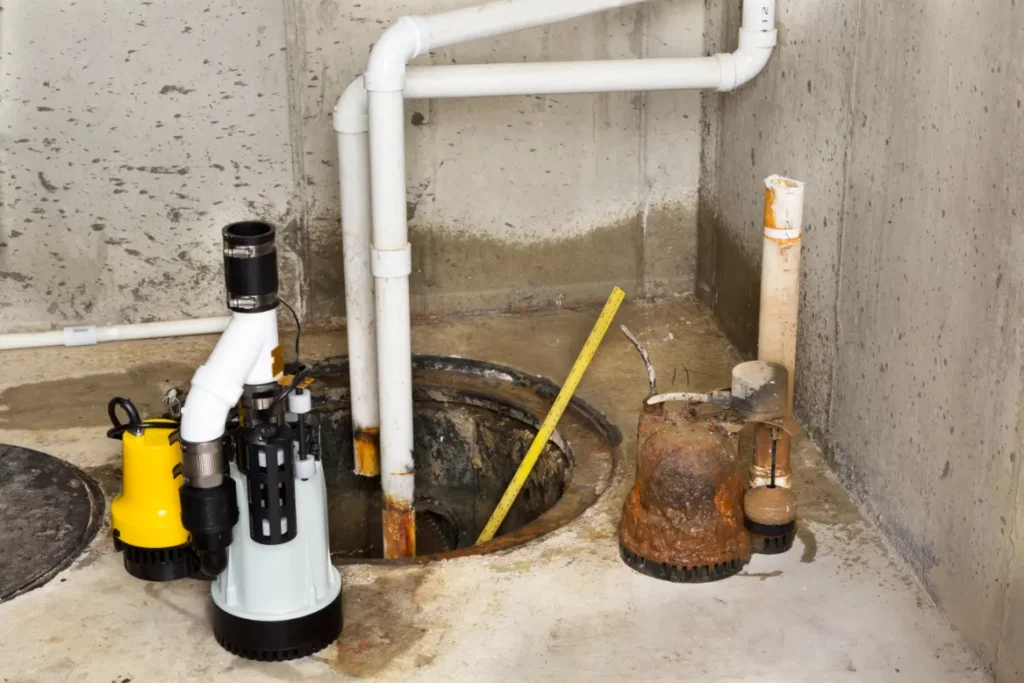
The 60-second test
Before tonight, do this:
- Find your sump pit (usually a covered hole in the basement floor or utility room).
- Pour a 5-gallon bucket of water into it.
- Watch what happens.
A healthy pump kicks on within a few seconds, drains the pit, and shuts back off. If yours hesitates, struggles, makes a grinding or rattling noise, or doesn’t turn on at all, don’t wait to find out during the storm. Call and get it looked at today.
Three things that fail quietly
A sump pump rarely gives warning. These are the three most common reasons a pump that “worked fine last time” doesn’t work tonight:
- No battery backup, or a dead one. Heavy storms bring power outages, and a primary pump is just a paperweight without electricity. A battery backup keeps it running through the outage, but only if the battery still holds a charge. Batteries lose capacity over a few years without anyone noticing until the moment they’re needed.
- A clogged or frozen discharge line. The pipe that carries water away from your foundation can get blocked by debris, mud, or a small animal’s nest. If the water has nowhere to go, the pump runs but the basement still floods.
- A pump that’s undersized or simply worn out. Sump pumps typically last 7-10 years. An older pump, or one that was never sized for your home’s water table, can run constantly during a heavy rain event and still lose the battle.
Why storms are the worst time to find out
Heavy rain and power outages tend to arrive together. High winds and lightning take down lines right as your sump pump has the most work to do. That’s the cruel timing of it: the exact moment your primary pump needs power most is also the moment it’s most likely to lose it.
A battery backup system is the only thing that closes that gap. It’s a small add-on next to the cost of basement water damage, and it’s the kind of thing that’s easy to put off until the week there’s a flood watch on the calendar.
When to call, and when you’re fine
You’re probably fine if: the bucket test worked smoothly, your pump is newer, and you already have a battery backup with a charged battery.
Call today if: the pump hesitated, ran but didn’t clear the pit, made unusual noise, you’re not sure how old it is, or you don’t have a battery backup at all. Any of those issues is worth a same-day look before the rain starts, not a during-the-storm emergency call.
Get it checked before the storm, not after
We’d much rather come out this afternoon for a quick sump pump check than pull a crew together to deal with a flooded basement on Wednesday. If your pump failed the bucket test, or you just want a second set of eyes before tonight, call or text Lazer Home Services today at (515) 212-6042.